tag

Showing posts with label Fantasy. Show all posts

Sunday, 6 August 2017

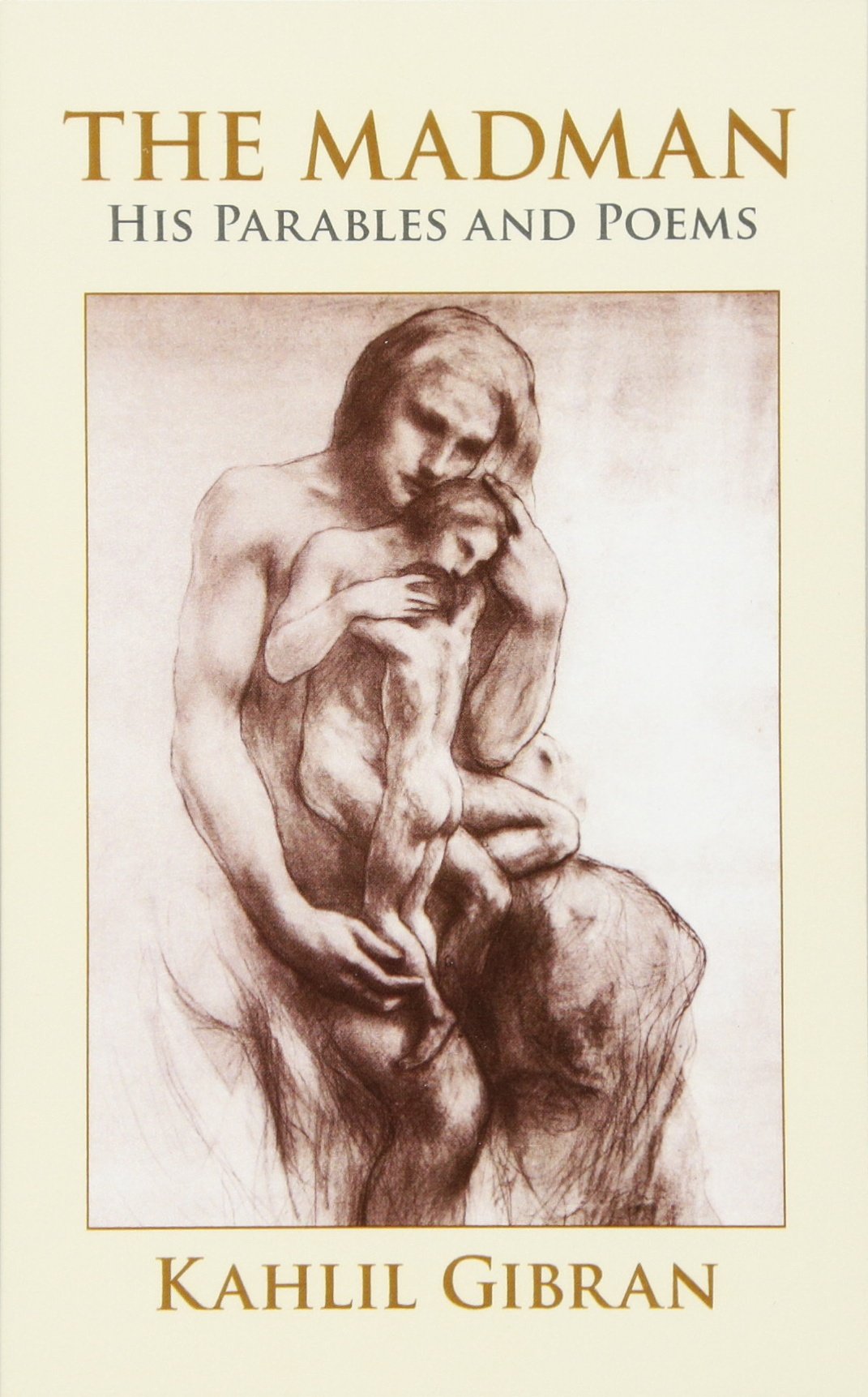
The Madman: His Poems and Parables by Khalil Gibran


                                                      Image result for kahlil gibran the madman


First Line: You ask me how I became a madman. It happened thus: One day, long before many gods were born, I woke from a deep sleep and found all my masks were stolen,-- the seven masks I have fashioned and worn in seven lives,--I ran maskless through the crowded streets shouting, "Thieves, thieves, the cursed thieves."

Usually I'd post up a picture of the physical book on my bed, so you can judge the heck out of my bed sheets while judging the book cover (don't even deny it, I have the best bed sheets and you are in the throes of jealousy) unfortunately, I do not have a physical copy of this beauty and came across it one night in my e-book library.

This book is like Aesop tales, but for adults. Not that Aesop isn't for adults, but still--

The parables and the poems touch on the mundane to the highly probable feelings that people have and don't delve into unless they're high as a kite or if they've been drinking all night, staring out into the night, thunderstorm in the distance, etc.


And they're all in line with how callously we laypeople observe ourselves. The topics chosen for the parables and poems of the madman persona are on religion, philosophy, the futility of existence, the strangeness of man and his paradoxical nature, our many selves, loneliness and the cyclical manner of life, satire, etc. In short, all the fun stuff.

All these parables and poems are the types that take some digging and introspection. They're chockful of metaphors and personification of animals and nature, as conducted in the tradition of parables. A bit of 'mental masturbation', as a certain someone I know would put it.

A personal favourite of mine would be the parable of the Seven Selves. (Seven is a significant number in christianity, and Gibran uses this number quite a bit within this book.) It talks about the facets of the personality of the persona The Madman and how they all wish to rebel against him. The detachment of these Selves from the persona and how they're each given a sentience that allows them to express themselves is intriguing. Each self represents a recurring part of the persona, for instance, the Pained self, the Joyous self, the Love-ridden self, the Loathing self, and so on. Perhaps these routine selves/actions wish to break free of a cycle formed by the madman, alluding to the habitual nature of man.

Snow is clearly mad, because uh.. SEVEN MEN? Uh. HELLO? 

There's another parable called The Two Cages, where in one cage is a lion and in the other is a 'songless sparrow'. Both great and small are on equal terms because both are in cages, which explains why the sparrow says to the lion, "Good morrow to thee, brother prisoner".

All in all, the 35 parables and poems won't take long to read but each one will leave its imprint.

tl;dr
Are there animals in the novel?: Lots.
Are there sexy times in it?: Nah. 
Are there dead people in it?: What is philosophy without the dead?
Is it lengthy?: Not at all. In fact it would probably take less than 20 minutes to read. Longer to digest though.
Reread?: Abso-fucking-lutely.
Judge the book by its cover: I wish I actually had a physical copy to be judgy about.
Rating: 4.8/5 meows.

Pun:  Aren't we all Khalil mad?


Monday, 31 October 2016

The Beruas Prophecy by Iskandar Al-Bakri


First line: Balik Pulau 1823. Friday evening just after eight. Yaakob lives with his wife and three daughters in a village in the west of Penang Island.

Pendekar Melayu (Malay martial artists) tales written by contemporary authors are few and far in-between. Seriously, ask any Malaysian what comes to mind when they think of Malayan warriors. I guarantee, nine out of ten will either say: "Harr? Lu cho hami?" or "Hang Tuah/Hang Jebat." These answers will either be paired with said Malaysian furrowing their brows and scratching a sudden head itch, or them describing a wide variety of indiscernible features these old dead dudes might have had. Maybe make a few kung-fu noises because who knows, they could've sounded like Bruce Lee.

Best "Lu Cho Hami?" face.

At first, this book truly was a breath of fresh air. We are transported to the 1800s to watch the story unfold between British colonisers going up against Malay warriors, within the backdrop of Pre-independent Malaya. The novel is infused with local myths and legends, familiar and unfamiliar religious practices, swashbuckling pirates (when have they not been swashbuckling, really?), lots of bloodshed, black magic and warring secret societies all tied together by the ravenous hunt for the ancient treasure hoard of Malik Al-Mansur.

And then there's the stale air.

I recently had the opportunity to see the author in the flesh and watch him explain the inspiration behind his (first) novel and while some parts were enlightening, I will be frank:

Interesting concept! But God smite me down, it was terribly delivered. Pretty fucking choppy, too fast paced, too many characters with little to no development that appear and disappear seemingly without reason, too many 'main' characters, too many story arcs, and many more headache-inducing errors that made the read rather disjointed. The main reason why I leave the first line of each novel I review is to give readers a taste of what the book is like. This is exactly the writing style of The Beruas Prophecy. It is flat and simplistic, at best.

I'd hate for this post to become an attack on the author, especially since this was his first book and (god help us all he claimed he had never read a novel in his life) so I will shut up on that front. However if there is one good thing I must say about this book, it is:

History is our greatest liar. It has many faces. You make of it as you wish. As the old adage goes, "history is written by the winners," and when you read through this novel and compare it to Malaysian historical texts, you will see who the clear winners are. But again, history is a many-faced entity.

The cake. The cake is the winner. I'm kidding. I do like cake though, lying or not.
What I especially enjoyed about this novel is the mysticism and Silat martial art scenes as well as the fight sequences. If you're into voodoo and the like, you will enjoy the details meticulously pored into the black magic scenes because let's face it, the occult shit can get pretty exciting with the 'sacrifice-chicken-blood-summon-cursed-weapons-dance-around-the-fire-call-upon-ancient-spirits-curse-your-enemies-on-your-last-breath' routine. The author himself said the spells within the novel are all real. I scoffed of course. Nothing is real until you decide to make it so.

But to his credit, Al-Bakri is very precise in describing the silat moves as well as Malayan 19th century warfare. He provides the names for all the silat techniques within the book and you can even look them up if you want to get a better picture of the action. Unfortunately, no Bruce Lee noises.

All in all, I wasn't blown away. There were too many elements squashed within the 233 page novel, and not all of them were well developed. But I will give credit where it is due, he chose a fairly interesting topic to explore, and this novel was long-listed for The Commonwealth Book Prize in 2012 for the Best First Book category.

tl;dr
Are there animals in the novel?: Do ancient spirit snakes count?
Are there sexy times in it?: Yawn. 
Are there dead people in it?: Yep. A lot of dying in this one.
Is it lengthy?: Nah. Probably will take a day or two at most.
Reread?: Fuck no.
Judge the book by its cover: I really like the cover. The shadow puppets are excellent cultural markers.
Rating: 2/5 meows

Pun: Some parts Iskandar creepy. Happy Halloween!


Monday, 25 July 2016

The Ocean at the End of the Lane By Neil Gaiman

First line: "It was only a duck pond out at the back of the farm."


This sucker will leave you with a want for your own magical soul-search. Lord knows we need one of those because we're all lost little shits trying to fit in but not really wanting to because deep down we're all 'special snowflakes', but you know you gotta make connections because that's the only way you survive but that takes money and you're broke as fuck and you still have to pay rent and the landlady is scary.

(By the way, Kung Fu Hustle is top notch.)

Also, you should pay your rent on time. Just sayin'.

The Ocean at the End of the Lane starts with a grown man indulging in the memories of his seven year old self. To a certain extent, it is autobiographical. Neil--I'd like to be on first name basis here--Ugh I wish we were friends!--uses a lot of his own experiences from his childhood and gives them a magical polish in this novel. You'd especially identify with the protagonist if you were the quiet, lonely kid with a penchant for a wild imagination.

And if you've read most of his books, you'll see a very familiar surname making an appearance: The Hempstocks. I'm not going to tell you where among his books they appear because you're on the fucking internet. In this novel they're the companions our unnamed protagonist remembers on his trip down memory lane. I'd hate to go into a literary discussion over why their names are present and his isn't, but I'll leave it at this: Who you are now is not the child you were then because your identity is subjected to the fabric of time and circumstance. What you will remember though, are the people who influenced that part of your life.

Compared to his other works (Sandman, Stardust, American Gods, etc.) this one takes a light-hearted tone, but it's not without its essential Gaiman-esque depth. Neil will write a book for a child realistically, in that it'll be inventive, colourful, and quirky but dark. Some parts of the novel are especially disturbing to adults because you realise the implications. Nonetheless, the novel is simultaneously childlike enough for a 12 year old to understand it, and poignant enough to leave a dent in the heart of the grumpiest adult. So yes, buy this for everyone and anyone who doesn't hate magic! Especially that asshole who needs a nostalgic whack upside the head.

The plot is fairly linear, it doesn't jump or leave you hanging, but you will have to piece some parts together to make sense of it all. The action sequences will have you page-turning like your thumbs are on fire, but there were some dips in my interest levels. You've definitely got to give this book a second read to fully grasp the innuendo and the creatures he uses as symbolism.

Its portrayal of childhood will have you drawing parallels with your own. You know, those days when every little thing was a fantastical adventure, and you had friends aplenty to share it with. Now you don't really have any friends and reheating cold coffee in the microwave is the most adventure you've had all week.

Overall, I'd recommend this book to anyone who wants a momentary fragment of their childhood back because let's be real here: Adulthood sucks.

Kaijus on the other hand...


tl;dr
Are there animals in the novel?: A kitten (the least complex thing I can describe it as) among others.
Are there sexy times in it?: A pinch. It's about childhood, you pervert.
Are there dead people in it?: Yes and no. It's a fantasy novel. Death is complicated.
Is it lengthy?: Nope. You could finish this baby in a day.
Reread?: Yes sir, yes sir three bags full.
Judge the book by its cover: I think it's meh, but you'll see why this image is used.
Rating: 3.8/5 meows.

Pun: I think I Neil-ed this first one!